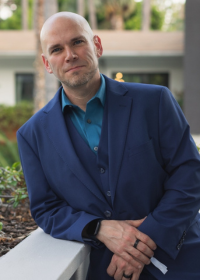
InkTip: You've been writing for years, now have numerous produced credits and are even co-producing, but that's not where you started. What was your journey to this point?
Sean Wathen: I moved from Louisville, Kentucky, to Los Angeles in 2006 to pursue a career in the film industry. I started out working on television shows like 24, Heroes, and House, then moved over to the studio side and worked for MTV. Eventually, I became a writer’s assistant to Michael Mann, which gave me an incredible opportunity to learn from someone whose work I’d long admired. Throughout those years, I kept writing my own scripts. Over time, I began optioning more screenplays and getting hired for writing assignments, until I had enough work to make the leap into writing full time. It was a gradual transition built on years of writing, learning, and finding opportunities.
My credits now include writing and co-producing Sniper: The Last Stand (2025), Sniper: No Nation (2026), and the upcoming Sniper: No Nation – Part 2 (2027) for Destination Films, a subsidiary of Sony Pictures. The Last Stand and No Nation both climbed to #2 on Netflix's Top 10 Movies and remained in the Top 10 for more than a week (with No Nation premiering at #1 in 19 countries). Previously named on Tracking Board’s “Young & Hungry List,” I also co-wrote the Lionsgate thriller Escape the Field (2022) and wrote the holiday features A Chrismystery (2025) and Happy Holly Day (2026). I also have a script optioned to Origin Films, and I'm developing two projects with Zero Gravity.
InkTip: You worked in the industry as a production coordinator for big shows like House. As a former production coordinator myself, I understand how unglamorous that job is. However, did you find the knowledge you gained from it helped you later as a screenwriter?
Sean Wathen: Absolutely. Working in production taught me what it actually takes to get something from the page to the screen. You learn how scheduling, locations, cast, and even seemingly small details can affect a budget. That experience helped me understand the practical implications of what I was writing. It became especially valuable when I started producing my own screenplays, like on the Sniper films. Having that background helped me work with the production team to find solutions that protect the story while staying within the resources we have.
InkTip: You have used InkTip’s service for almost 20 years. What about InkTip keeps you writing and coming back?
Sean Wathen: What keeps me coming back is that InkTip connects me with producers who actually get things made. The projects I’ve had optioned through the service have almost always gone on to be produced, and that’s huge as a writer. I’ve had options elsewhere where a script sits on a shelf until the option expires and I get it back. With InkTip, I’ve consistently found producers who follow through. After almost 20 years, those results are what keep me coming back.
InkTip: You've had over 20 options and hires through InkTip. That’s wonderful! What’s your secret?
Sean Wathen: I think it starts with the fact that I genuinely love writing. I’ve never related to the saying, “I don’t like writing, but I love having written.” For me, the joy is in the process: creating characters, discovering their stories, and shaping them through development and rewriting. I get stories stuck in my head that keep swirling around until I sit down and put them on the page. There’s nothing else I’d rather do.
Beyond that, it’s persistence and a commitment to creating strong material. You can’t rely on one or two scripts, but building a portfolio is about quality as much as quantity. I usually write about two new scripts a year, balanced with revisiting older material, doing rewrites on projects that have been optioned, and taking on paid writing assignments.
I don’t know that there’s a secret beyond continuing to do the work, improving with each script, and giving yourself more opportunities by consistently creating material you believe in.
InkTip: You write in a variety of genres: thriller, romance, action, horror, comedy. How did you train yourself to be adaptable to a multitude of genres?
Sean Wathen: I think my adaptability comes from following the story rather than starting with a genre. Usually, an idea or a character comes to me first, and I build from there. If that story lends itself to horror, I explore what makes it frightening. If it’s a comedy, I look for the humor in the characters and their circumstances. Working across genres has been its own kind of training: each script asks me to develop different skills while still focusing on character, structure, and storytelling.
That variety hasn’t always made finding representation easy. I’m currently unrepresented, and managers have told me they’re unsure where to place me because I don’t fit neatly into one genre. Sometimes I joke that I should pick a lane just to make their job easier, but creatively, I don’t want to limit myself that way. Actors, directors, and producers get to work across comedy, drama, horror, and action, and I’d love to see writers given that same latitude. What excites me is telling a compelling story. The genre is how I tell it, rather than what determines whether I want to write it.
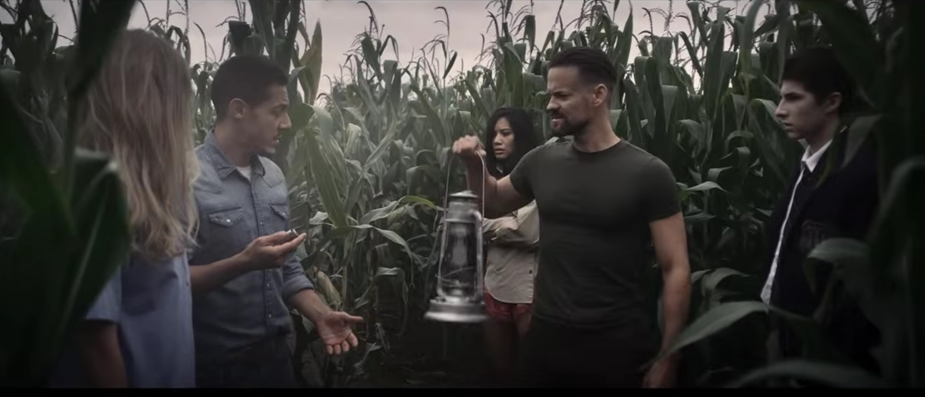 Escape the Field (2022)
InkTip: What is the best piece of writing advice that you’ve received?
Sean Wathen: “Don’t just write what you know in your head. Write what you know in your heart." That advice has always stayed with me. I don’t think “write what you know” means you’re limited to your own experiences. You can write about people, places, and situations far outside your life, but the emotions should come from somewhere honest. Love, fear, grief, ambition, those are things we can draw on regardless of the genre. For me, that emotional truth is what makes a story connect.
InkTip: Happy Holly Day is your latest credit that will be released soon. It was discovered on InkTip by Kristi Kilday and Jeremy Winton. Can you give our readers your elevator pitch for the film?
Sean Wathen: Happy Holly Day is a Christmas comedy about a tightly wound, workaholic therapist whose plans for an orderly holiday unravel when her Christmas-obsessed neighbor, Holly Day, wins over her family, and starts falling for her son. The more she tries to keep Holly’s over-the-top holiday cheer at bay, the more she realizes that this wonderfully chaotic young woman might be giving her family exactly what they’ve been missing. It’s a story about love, connection, and the traditions that bring us together.
InkTip: You’ve had a few Christmas movies produced. What do you love about the genre?
Sean Wathen: I love the feel-good nature of these movies. I write a lot of darker material: detective thrillers, horror stories, scripts that explore some difficult themes, so it’s a welcome change to write something lighter that leaves people feeling hopeful. I’m also a huge Christmas fan. Holly is definitely loosely based on me, although I’ll let the people who know me decide how loosely! Whatever holiday you celebrate, to me, the season is about the love and joy we share with family and friends. Everything else is just confetti. It’s a reminder at the end of the year to pause and recognize what matters most. Whatever happened over the past twelve months, remember the people you love, and celebrate them. That’s something my parents taught me growing up, and it’s stayed with me ever since.
InkTip: What is your writing process: outline or pantser?
Sean Wathen: I’m definitely an outliner. Pantser is not for me. I like to know where the story is going before I start writing the screenplay. My process usually begins with months of notes on my phone: characters, dialogue, scenes, whatever comes to me. Once I have enough material, I start putting scenes onto notecards so I can see the shape of the story, move things around, and identify any missing connective tissue. From there, I build a detailed written outline, then start the screenplay. That groundwork gives me the confidence to explore along the way because I know where I’m headed.
InkTip: Where do you usually find inspiration for your scripts?
Sean Wathen: Everywhere, really. It might be a conversation with a friend, a news headline, or an idea in a book that makes me curious about something the author doesn’t fully explore. Sometimes that unanswered question is what gets a story started.
I also draw from my own life, both the good experiences and the difficult ones. Writing can be a way for me to process what I’m feeling and turn it into something meaningful. Other times, I’m simply curious about a subject and start researching it. Somewhere along the way, a character or a story emerges. A lot of my inspiration comes from following that curiosity and seeing where it leads.
InkTip: When do you know when one of your scripts is ready to market?
Sean Wathen: When I feel a script is ready, I get coverage from a few different sources. It’s easy to get so close to your own work that you lose perspective, so that outside feedback helps me understand what’s connecting and what still needs attention. I look especially close at notes that overlap. One reader’s response is one opinion, but if several people flag the same issue, that’s usually a sign I need to take another look. From there, I do another pass and decide whether the script needs more feedback or whether I feel confident enough to start sending it around. For me, being ready doesn’t mean every reader agrees on everything. It means I’ve addressed the recurring concerns and feel confident that the script is telling the story I intended.
InkTip: What advice do you have for writers regarding forming working relationships with producers?
Sean Wathen: Be confident in your choices and willing to explain why a character or scene matters, but remember that filmmaking is collaborative. Most producers want the same thing you do: the best possible film. Sometimes that means rewriting a scene you love. Treat it as a creative challenge, and always look for the note behind the note, the underlying concern rather than just the proposed fix.
When you find producers you enjoy working with, nurture those relationships beyond a single project. Send a holiday card, meet for coffee or lunch, and stay curious about what they’re working on and hearing around the industry. You don’t need a new script every time you reach out. Make room to learn from them and build mutual respect.
At the same time, collaboration has to go both ways. You deserve fair treatment and a producer who invests real effort in moving the project forward. For me, communication is essential. The producers I work with repeatedly keep me updated, even when the news is disappointing. I’d rather hear bad news than hear nothing, it tells me they’re engaged and trying. If someone consistently leaves you in the dark or lets your script sit without making an effort, be willing to walk away. A good working relationship needs commitment on both sides.
InkTip: What’s the one thing you wish you knew earlier in your career?
Sean Wathen: I wish I’d understood just how much rejection is a part of this career, and learned sooner not to take it personally. There are so many reasons someone might pass on a script or choose another writer, and you may never know what went into that decision. A project needs a lot of people to say yes, but sometimes one no is enough to stop it. You have to keep that from stopping you, too.
The same goes for notes. Early on, I’d get discouraged by a long list of revisions. Now I see rewriting as a creative challenge: how do I address someone’s concerns while preserving the characters, story, and themes that made me want to write it? That process can make the material much stronger.
I always come back to the speech in Rocky Balboa: “It ain't about how hard you hit. It's about how hard you can get hit and keep moving forward. How much you can take and keep moving forward.” That captures so much of this business. Stay hungry, stay persistent, and keep improving. You’ll need more resilience than you ever imagined, but if you love writing and telling stories, keep giving yourself another chance. As Rocky says, “That’s how winning is done!”
InkTip: What films have influenced you as a writer?
Sean Wathen: There are too many to pick just one! A Few Good Men, Se7en, The Silence of the Lambs, Memento, Die Hard, Good Will Hunting, Psycho, and the Bourne trilogy are all favorites, alongside films like Klaus and Arthur Christmas. They inspire me in different ways: dialogue, suspense, structure, character, and emotional payoff. I love stories that entertain you while making you feel something.
But for me, Casablanca is the greatest screenplay of all time. There’s a reason so much of its dialogue has been quoted and parodied: it’s extraordinary writing. The wit, romance, and heartbreak all serve the characters and their choices.
As for writers, Aaron Sorkin’s dialogue is like music. It has such rhythm, it makes my ears smile. Mike Flanagan is another favorite. I return to his films and series again and again, including The Life of Chuck. The Haunting of Hill House is actually the only film or television project that’s inspired me to get a tattoo. His ability to connect fear with deeply human emotions really resonates with me.
And I can’t leave out Nora Ephron, When Harry Met Sally and Sleepless in Seattle are classics. I also admire Elizabeth Meriwether’s work on Dying for Sex, Furious, and The Dropout, along with Katie Dippold (Widows Bay), Vince Gilligan (Breaking Bad, Better Call Saul), Simran Baidwan (The Pitt, House), and Keto Shimizu (Arrow, Legends of Tomorrow). My influences cross genres just as much as my own writing does.
InkTip: What other projects are you working on?
Sean Wathen: One project I’m especially excited about is Merry Fitmas. It’s a holiday romantic comedy about a former Olympic hopeful who reluctantly trains a world-famous fitness influencer for her hometown’s first-ever Fitmas Challenge, where competition turns into romance and both discover that life’s greatest victories aren’t measured by the finish line. Think the heart of The Holiday, the optimism of Ted Lasso, and the playful romantic rivalry of The Cutting Edge.
With the energy surrounding HYROX, run clubs, and fitness communities, it feels like a fresh way into a classic Christmas love story. Actress Molly McIntyre is attached as Riley, a role we developed together from the beginning. A nationally recognized commercial actress, award-winning dramatic performer, and certified NASM personal trainer and nutrition coach, Molly inspired many of the character's defining moments, including the film's emotional balance beam sequence, written specifically around her real-life abilities. Ultimately, it’s a feel-good story about second chances, finding balance, and a community learning to believe in one another.
I’m still looking for representation! Every film I’ve gotten made and every project I’m currently working on has grown out of relationships and opportunities I’ve worked hard to build. I’d love to find a manager or agent who shares my enthusiasm for the material and wants to help shape the next chapter of my career.
There’s one project in particular that, if it gets greenlit early next year, could be a major step forward (fingers crossed!). I also have other scripts I’m excited to find homes for, but with writing assignments keeping me busy, I have less time to get that material out there. Having someone in my corner to champion those projects and help build on this momentum would mean a lot.
InkTip: Thank you, Sean! It's been a pleasure chatting and hearing about your projects.
Sean Wathen: A huge thank you to InkTip for helping me build my career over the past 20 years. I’m grateful for the connections, opportunities, and stories that have made it to the screen along the way. And thank you to everyone who read this interview, I truly appreciate your time!
 A graduate of Northwestern University in radio/TV/film, Chris worked in the film industry as an assosiate producer on reality TV shows before moving into the record industry and eventually landing at InkTip where she runs a plethora of departments. She's written more than 100 articles featuring interviews with producers, screenwriters, actors, and novelists. She spends her free time spoiling her guinea pigs, hiking California, and actively avoiding parking in Hollywood.